


Power Lines: A Means for New Perspectives
– An exhibition review
Inside an old substation-turned event space lies a curious exhibition, sparking conversations on art, industry, labour and nature. The exhibition, titled Power Lines, brings together prominent pieces housed in the Mercedes-Benz art collection, reflecting on industrial means of production from a multitude of perspectives. Surprising as it is, Power Lines showcases not only a varied selection of works from the Mercedes-Benz collection, but also pieces by a number of artists residing in Central and Eastern Europe, creating a unique atmosphere to their display.
The premise of this exhibition is to question the nature of energy, its means of production and their connection to our everyday livelihoods and the spaces we occupy. The artworks are labelled in five distinct categories, among which prominent themes involve the workings of the machine, the means by which power and energy are created or the possibilities of a post-industrial future. Although these categories would indicate a specific arrangement of artworks in each room, the groups are most often mixed, creating a dialogue between works located in the same area.
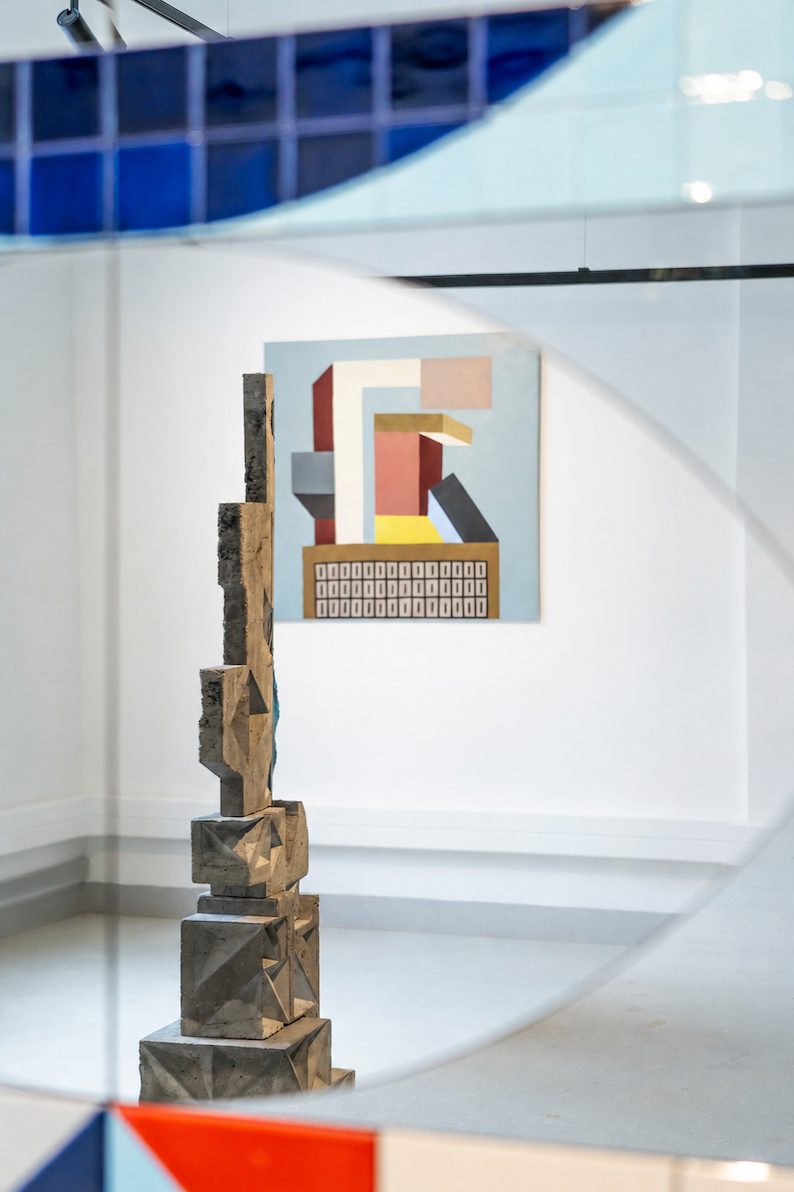 Nathalie Du Pasquier’s Untitled, 2015 (Mercedes-Benz Art Collection), and Marta Dyachenko’s Kaniv, 2025, reflected in Claudia Wieser’s Untitled, 2023 (Mercedes-Benz Art Collection). © VG Bild-Kunst, Bonn 2026, Marta Dyachenko, Claudia Wieser (photo: Dániel Török)
This act of opening up space for pondering and reflection is reinforced by another conversation created with the event space itself, the Merlin Theatre. Süveges Rita’s work, Petrocene, for example, features a mirror in the shape of an oil spill placed on the floor where the machines of the substation were located. The work draws the viewers’ eyes towards the ceiling, and thus to the architecture of the space, inviting us to think about the physical space we are in, its history and its prominence in our present lives as well. This work is complemented by several paintings from the artist, all discussing the conditions of a petrol-based society and its consequences for the future.
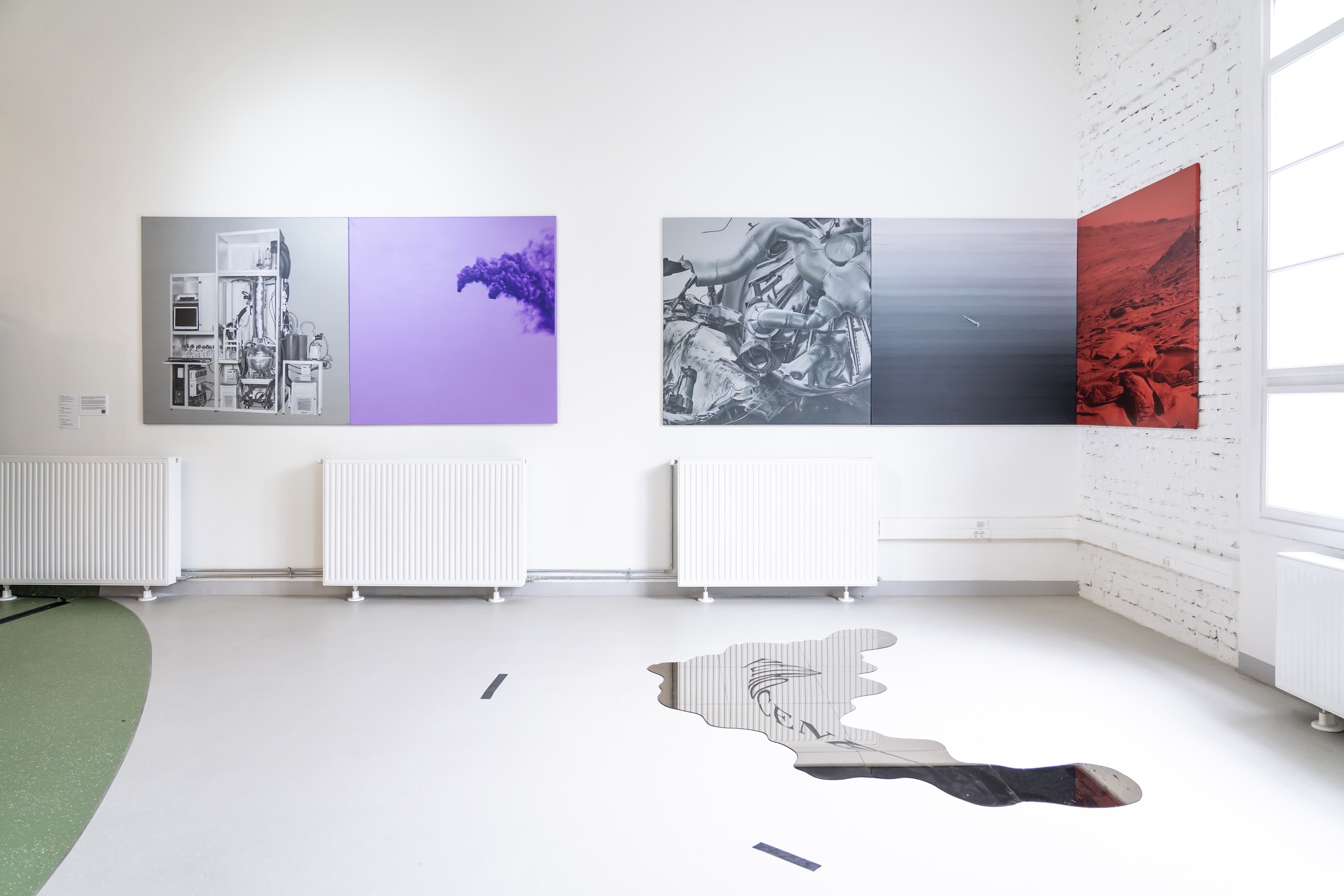 Works by Rita Süveges in the exhibition. On the wall: The Twilight of Petroleum; in the foreground: works from the Petrocene (Oil Spill) series
But perhaps unlike many exhibitions seen in Hungary in recent years, the exhibition also puts ecology at the forefront, commenting on systems of power that shape our view of the environment. Works such as Serban Savu’s paintings reflect on a certain tiredness brought upon humanity via the means of industrial production. The figures in his paintings all try to relax in various ways, some standing while others squatting or even lying down in the grass, or next to a river, perhaps even adjacent to a tree trunk.
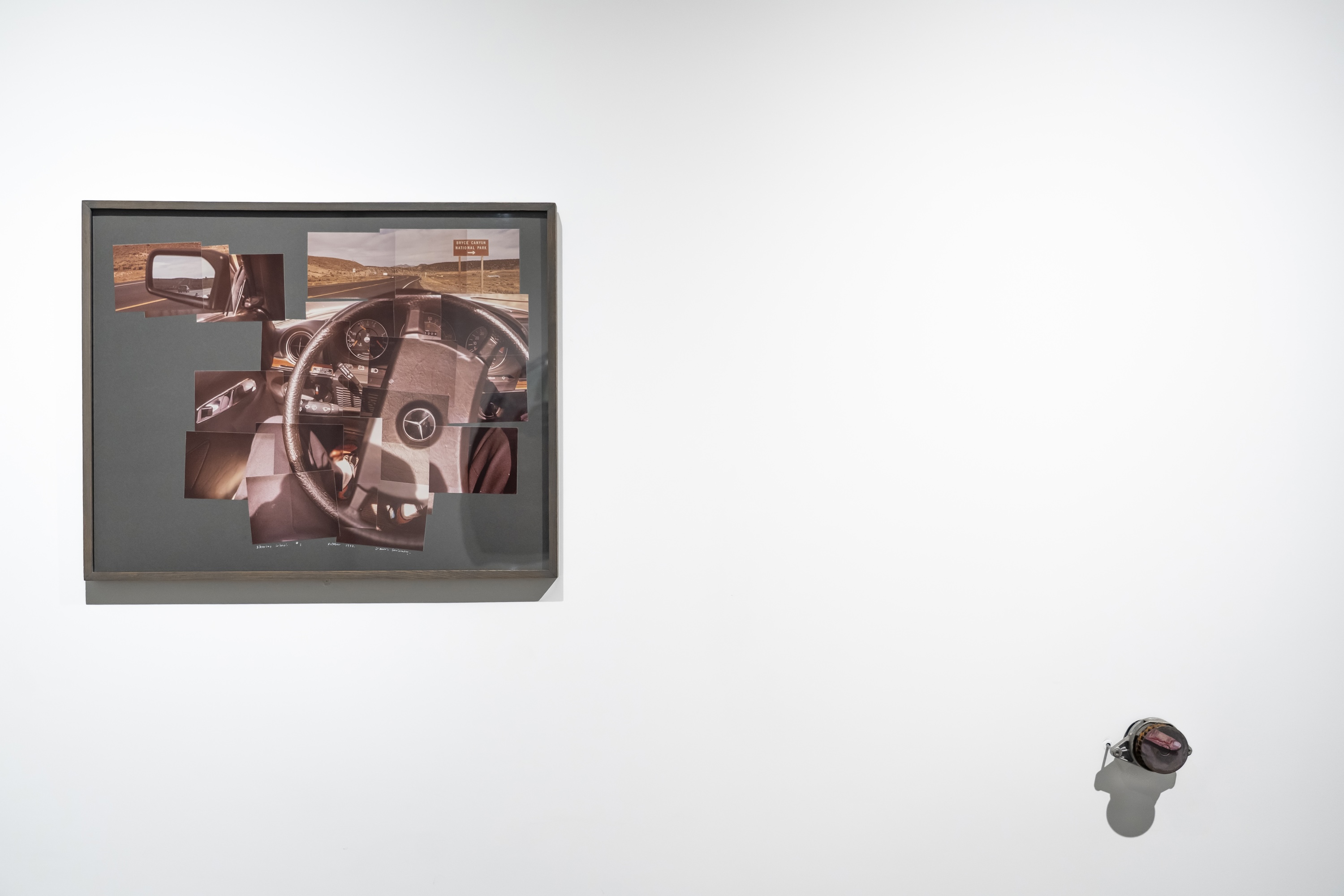 David Hockney’s The Steering Wheel #3, 1982, and Selma Selman’s Ophelia’s Awakening, 2024, Mercedes-Benz Art Collection. © David Hockney, Selma Selman
Here, nature is a means of escape and a chance to pause, yet the people in these paintings dwell awkwardly, as if rest could not be found in their current way of living. While Savu’s work can be deemed subtle in its criticism towards societal structures, other works in the exhibition, such as Mustafah Abdulaziz’s photographs, create a direct link between political and economic power and the state of the environment. Classic Club Golf Course, Palm Desert, California, USA, for that matter, juxtaposes the lushness of the golf course with its dried-up and seemingly dying surroundings. The photograph reminds us how, at the expense of exuberant leisure, lies the usage of resources needed to create such a bountiful green environment otherwise alien to the habitat it is placed in.
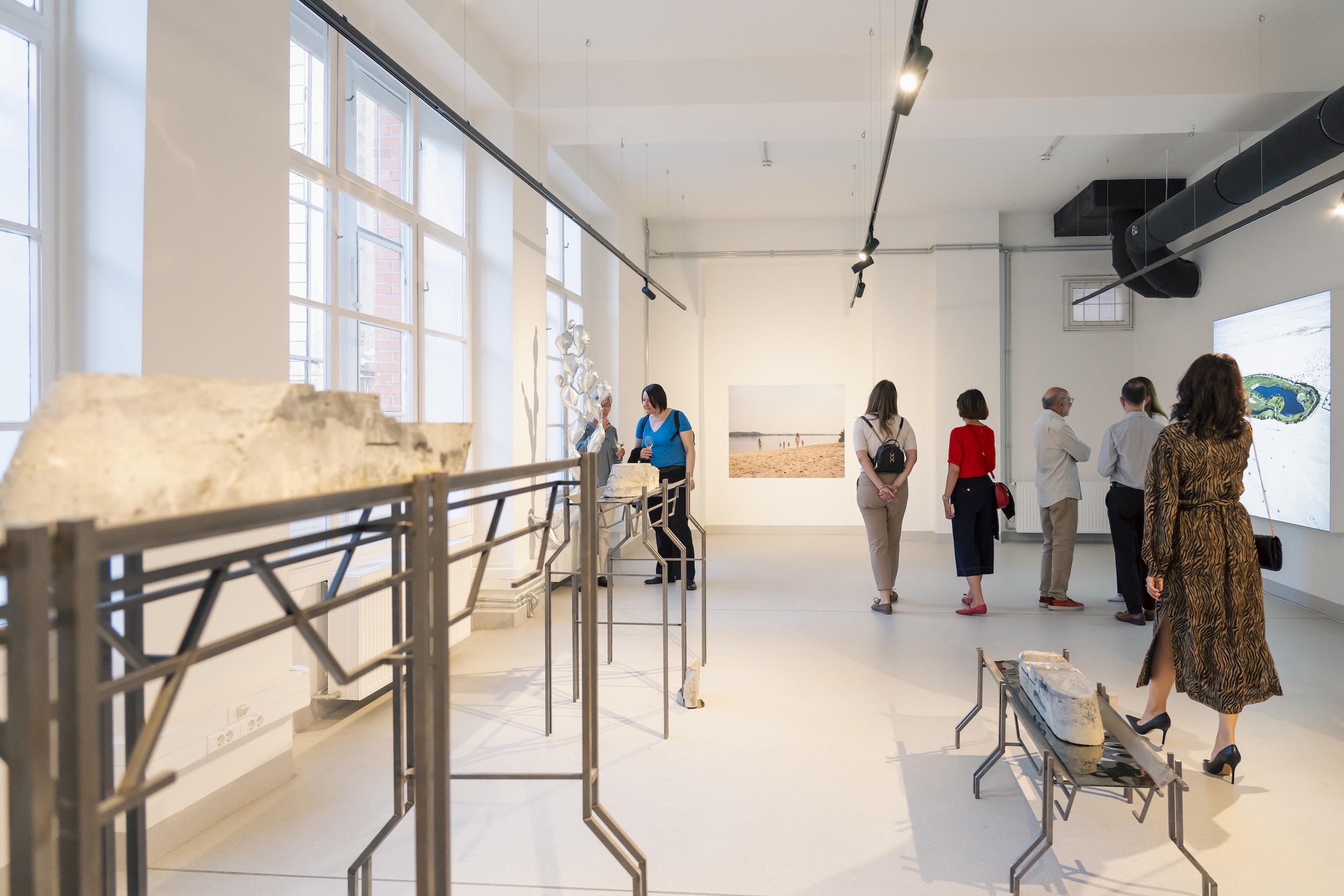 Visitors at the exhibition
This alienness can be observed in the context of the exhibition as a whole, given a comparison with its site of realisation. Hungary is a country heavily reliant on industrial means of production, with factories ever-growing throughout the country. It is also a place heavily affected by climate change, causing difficulties and uncertainties when it comes to water supplies or agricultural production amongst many, especially throughout the summertime. Thus, the Power Lines exhibition with such a unique and critical perspective on industry, nature and humanity could without a doubt feel strange. Yet, maybe this unfamiliarity in the exhibition’s critical outlook could bring about a fresh point of view, a catalyst to inspire new ways of seeing.
Cover photo: Visitors at the exhibition in Budapest. On the left: Selma Selman, Untitled, 2025; opposite: Robert Longo, Untitled (engine), 1995. Mercedes-Benz Art Collection. © Selma Selman, VG Bild-Kunst, Bonn 2026 (photos: Dániel Török)
Read more:
POWER LINES: először érkezett Magyarországra a Mercedes-Benz nemzetközi művészeti gyűjteménye – Az ipar, az energia és a mobilitás lenyomatai jelennek meg harminc alkotó munkáin keresztül.
„A párbeszédre épülő együttműködésekben az az izgalmas, hogy gyűjteményünket minden alkalommal új szemszögből szemléljük” – Interjú dr. Anne Viethtel, a Mercedes-Benz Art Collection és a Corporate Art Department vezetőjével
„Szeretek helyzetekre, helyszínekre, témákra, adottságokra, együttműködő partnerekre reagálni” – Beszélgetés Török Krisztián Gáborral, a POWER LINES kiállítás kurátorával
Szenvedélyesen szeretjük a kultúrát, a művészeteket és a stratégiai gondolkodást. Ez ingyen van. A lapkiadás és az online magazin működtetése azonban pénzbe kerül. Kérjük, ha teheti, legyen ön is mecénás és támogassa az Art is Business hiánypótló munkáját!
2025 decemberében jelent meg A mecenatúra magyarországi története 1900–2025 című kiadványunk, egy könyv azokról, akik fontosnak tartották, illetve tartják a művészet pártolását.
A kötet megvásárlásával a munkánkat támogatja.


